
Introduction
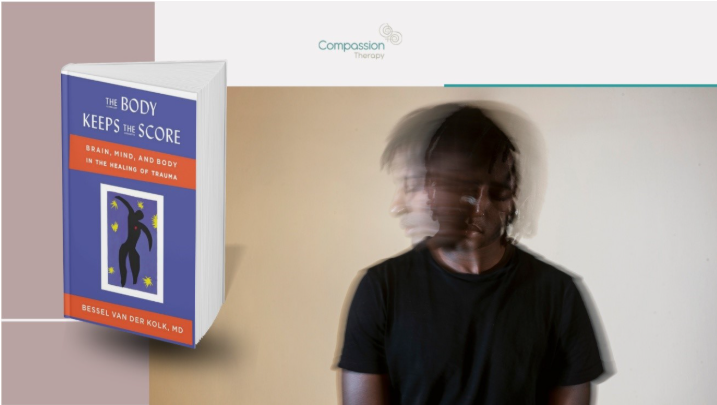
For decades, mainstream psychiatry treated trauma as a purely psychological phenomenon, a cognitive “memory” problem that could simply be talked through or medicated away. Bessel van der Kolk’s landmark work overturned that assumption by proving that trauma is an intense physiological reality, one that literally rearranges the brain’s wiring and the body’s nervous system. This makes it essential eading for anyone undergoing Compassionate Inquiry™, because it provides the scientific foundation for what happens in every CI session. When a CI therapist interrupts a client’s narrative to ask, “Where do you feel that in your body?”, they are not just changing the subject. They are actively redirecting the client’s awareness to the precise physical locations where the traumatic memory is stored. Understanding this book helps clients drop their shame; they realise that their explosive rage, chronic numbness, or sudden panic are not character flaws, but biological adaptations designed to help them survive.
Summary of the Book
The Body Keeps the Score meticulously documents how traumatic stress shifts the brain into a state of hyperarousal or severe dissociation, and explains that trauma compromises the brain area that communicates the physical, embodied feeling of being alive. Van der Kolk highlights that the traditional top-down approach of talking is rarely enough to heal deep wounds, because under extreme stress, the language centres of the brain actually shut down. Healing must therefore incorporate “bottom-up” strategies. By utilising therapies that involve breath, movement, and touch, traumatised individuals can help their bodies physically contradict the helplessness and collapse that characterised the original trauma.
The Smoke Detector and the Watchtower
Van der Kolk uses a brilliant analogy for the brain’s stress response. The amygdala acts as the brain’s “smoke detector,” assessing whether incoming information signifies danger. The medial prefrontal cortex acts as the “watchtower,” offering a bird’s-eye view to determine if the danger is real or a false alarm. In traumatised individuals, the smoke detector becomes hyperactive and the watchtower shuts down, meaning they react to everyday stress as if it were a life-or-death threat. CI helps clients slowly bring their “watchtower” back online by practising mindful, non-judgmental observation of their physical triggers.
Alexithymia and the Loss of the Body
A profound consequence of trauma is alexithymia: the inability to identify and put words to feelings. When sensations become too terrifying to bear, people unconsciously shut down their connection to their physical bodies. They may feel an overwhelming emptiness, or engage in self-harm just to replace unbearable emotions with definable physical sensations. CI directly targets this numbness by teaching clients to slowly notice and tolerate small physical sensations, like tightness in the chest or a knot in the stomach, without being overwhelmed, thus safely guiding them back into their own skin.
Healing Happens from the Bottom Up
Because trauma leaves physical imprints in the body, it cannot be reasoned away. When the rational brain is disconnected from the emotional brain, we cannot “think” ourselves out of our pain. Healing requires “bottom-up” regulation, utilising movement, rhythm, yoga, tapping, or theatre to change how the body feels in the present moment. CI recognises this by asking clients to breathe into their tension or to explore what a physical symptom might say if it had a voice, allowing the trapped survival energy to finally discharge.
Conclusion
Van der Kolk’s research gives CI clients something concrete: a map of liberation grounded in science. It removes the burden of trying to “figure it out” intellectually, and shows that the body physically keeps the score of unmet childhood needs and past terrors. That understanding empowers clients to use somatic awareness as the ultimate key to unlocking their past and reclaiming their vibrant, present-moment lives.