
Introduction
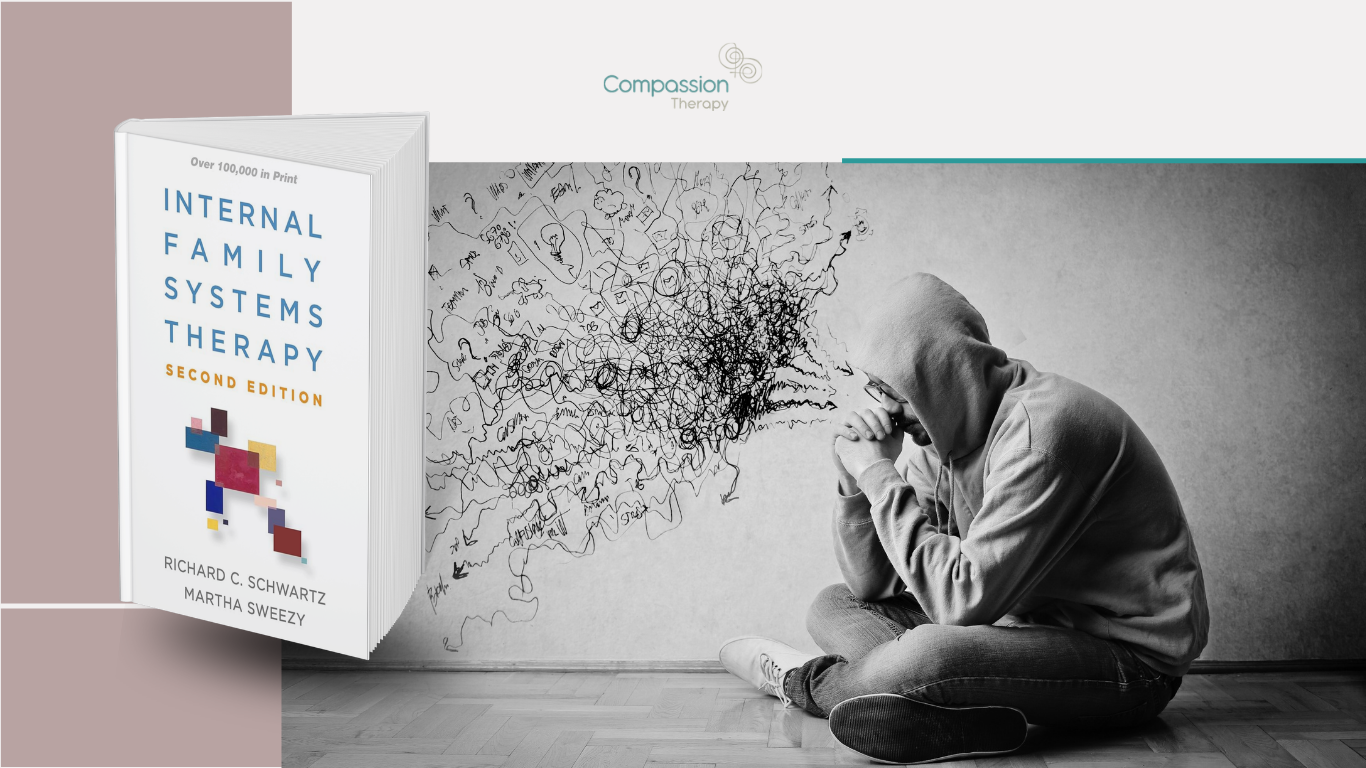
Have you ever felt like one part of you wants to completely change your life, while another part is terrified of making a single move? Richard C. Schwartz’s Internal Family Systems Therapy does more than simply acknowledge this tension. It maps it, names it, and offers a way through it. In Compassionate Inquiry™, we return again and again to the question Gabor Maté poses at the heart of the work: “If you are not what happened to you, and you are not your limitations, coping strategies or failures, who are you?” IFS is, in many ways, the exact cartography needed to answer that question. It helps clients understand that their addictions, explosive anger, and debilitating anxieties are not their core identity, but rather protective “parts” operating within a larger internal system, parts that formed to keep the whole person safe.
Summary of the Book
The IFS model postulates that the human psyche is naturally multiple, made up of various subpersonalities or “parts,” all operating under the guidance of a core “Self.” When individuals experience trauma, these parts are forced out of their natural states and into extreme roles to protect the system from pain. “Exiles” hold the isolated memories and emotional pain. “Managers” attempt to control the environment to prevent the Exiles from being triggered, while “Firefighters” reactively jump in to extinguish the pain, often through dissociation, bingeing, or rage, when the Managers fail. Healing happens when the core Self is accessed, allowing the parts to “unblend” and safely release their extreme burdens.
Destructive Behaviours as Misguided Protectors
A profound shift occurs in therapy when clients stop hating their own dysfunctions. According to IFS, behaviours that look like self-sabotage are actually desperate attempts by Firefighters and Managers to keep the individual safe from the overwhelming agony of the Exiles. CI draws on this insight directly. By examining the “interpretations or perceptions that link to emotions,” CI helps clients recognise that their reactions are protective strategies generated by a part of themselves, rather than a fundamental flaw in their character.
Unblending and the Core Self
The core Self is the true essence of a person, possessing innate qualities of compassion, curiosity, calm, and courage. In order to heal, a person must “unblend” from their parts. When a client is consumed by anger, they believe they are angry. Unblending allows the client to say, “A part of me is angry, and my Self is witnessing it.” CI achieves this by guiding clients to step back and observe their physical sensations and emotional triggers, effectively shifting them from the blended state of the part into the spaciousness of the Self.
Compassionate Witnessing
Once a client is anchored in the Self, they can turn toward their wounded parts with genuine curiosity and compassion. Rather than trying to banish the inner critic or the addict, the Self interviews it, gets curious about it. This aligns precisely with CI’s method of examining the underlying beliefs that fuel our emotions. When protective parts feel heard and witnessed by the Self, they naturally relax, allowing access to the exiled trauma so it can finally be unburdened and integrated.
Conclusion
IFS offers CI clients something quietly radical: it removes the pathologising labels from their struggles entirely. By learning to relate to their internal system with compassionate curiosity, clients discover that beneath their coping strategies and limitations lies an undamaged, radiant Self, one that is fully capable of bringing harmony to their entire internal family.